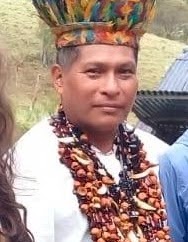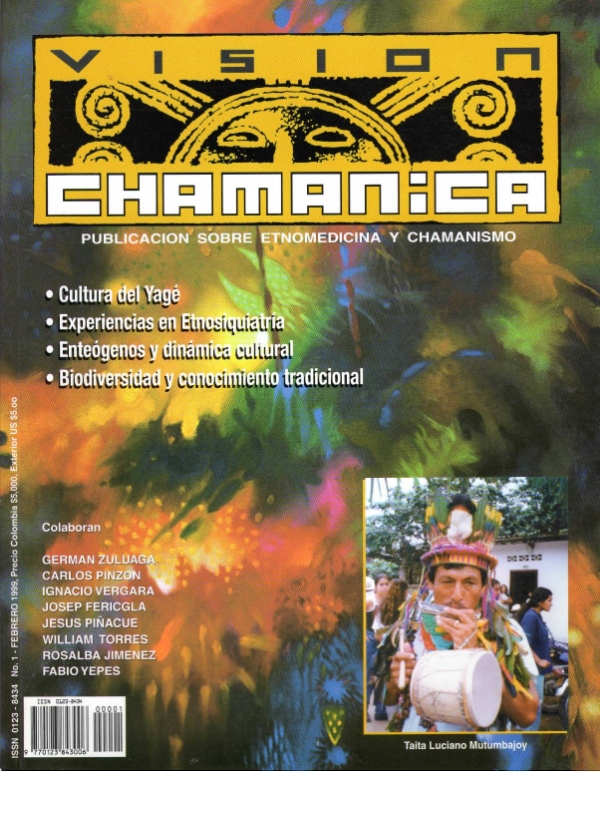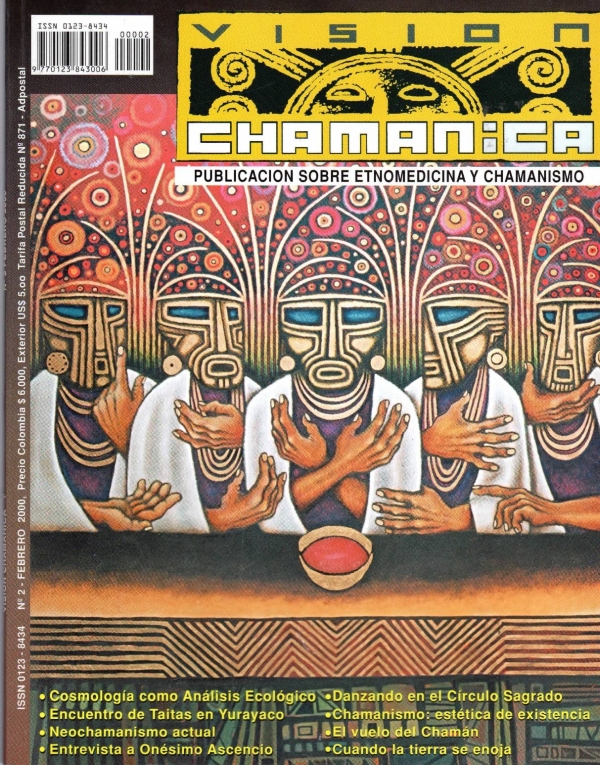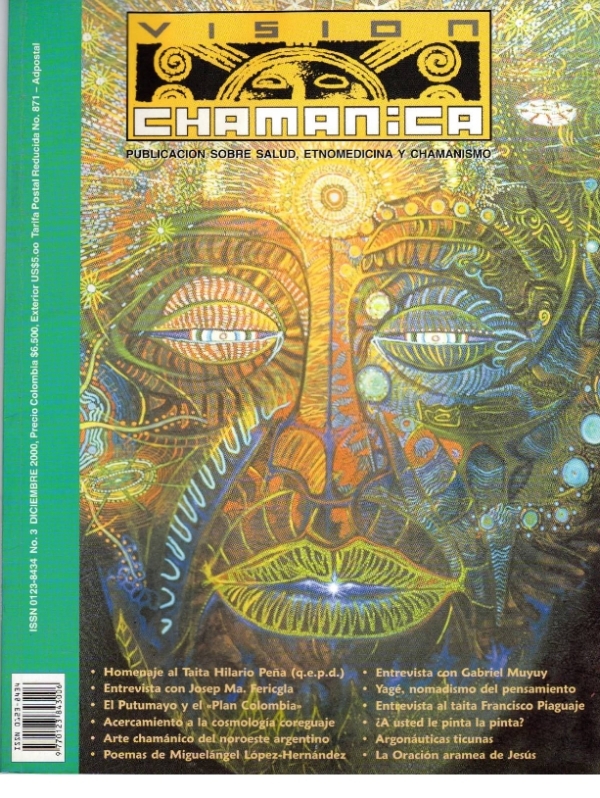
Spiritually, when taking yagé, one gains knowledge—mentally—to understand the spiritual world, from East to West, from South to North. A single vision from it is enough. For us, yagé is a sacred plant, a teaching passed down by our paternal grandparents thousands of years ago. This tradition runs through the entire Amazon, which for us is life itself, our reason for being. It is the most sacred thing there is. Through the spirit of yagé, the spirit of God is also present, the one who gives us life and strengthens us. In traditional terms, yagé serves two main purposes in Indigenous and farming communities. First, it is used to initiate shamans—known as “taitas” or traditional doctors. Second, it serves as medicine—to heal. It is both a remedy and a means for someone to become a healer. In the jungle, we seek it ourselves and prepare it from plants for healing purposes. Once taken and activated, the suffering from many illnesses stops. We always give yagé for purification, cleansing, healing, and to continue working and guiding along the spiritual path. The original area of yagé in Colombia is the southwest—specifically the Amazonian foothills, where Indigenous communities have traditionally consumed it. Back in 1965, this was all jungle. I remember—it was purely Indigenous territory. We lived in Santa Rosa del Guamuez and San Antonio de Gómez. Some settlers were there too, I don’t know for how long, but back then, there were no outsiders—no white people. We lived as true forest people, wild Indians. If we saw a white person, we’d run and hide in the jungle. Only when the Spanish Capuchin missionaries came did we begin to change slightly. Now there’s a road, and people from all over are coming, claiming they’re from here, saying they were raised here. The settlers lie, saying they were the first. They come from Cauca and Upper Putumayo. They say they are ancient Indigenous, but we know that’s not true. We lived as true forest people before, with different food, no bread, no milk—just what the land gave us. For us, land and territory are sacred. That’s where our wisdom lies—our power as traditional doctors and Indigenous peoples. With our land, we have everything: food, medicinal plants (which are our life), education, health, everything. Economically, things are hard, even though we have our territory. For example, we, the Cofán people, have the Cofán territory called Zioquï or Maricañ, recognized as a reserve. For us, it’s sacred and untouchable. We hunt and fish there—that’s sacred to us. Our vision is to protect our land, not destroy it. Without the forest, the world’s lungs die. The earth is being exploited now—by oil companies like Ecopetrol. Eventually, the Earth will be left like an empty eggshell. This is happening because of aerial spraying and government policies to eliminate illicit crops. It used to be easier to plant and harvest. Now, the land no longer has the same capacity. We have to buy food, and if you don’t, you have nothing. Our territory is being threatened by multinationals—oil and mining companies. This has deeply affected the ceremonies around yagé. When nature loses its positive energy, the taita also loses spiritual strength. The taita is a bridge between Mother Nature and people, and that bond weakens with environmental destruction. This forest is preserved by me. I have medicinal plants growing here. Beyond this area is where yagé is cultivated. When we drink it, we use the vine called “the ladder to heaven.” You mash it, cook it, and drink a cup. This knowledge comes from our ancestors. A real taita can heal and treat illnesses. That’s what being a traditional doctor means—not one from the cities, but one raised in the jungle. I became a doctor after age 15 and kept learning. Our grandparents were traditional doctors too—they never went to hospitals, never needed Western doctors. So we continue with that tradition. We don’t have books or diplomas like Western doctors. We are doctors of the forest. But nowadays, there are many challenges in the world of yagé. Some people claim to be Indigenous, but they’re not—they’re frauds. We call them charlatans. They wear crowns and traditional clothes without having any real knowledge. They make us look bad. Some people take yagé once, twice, or three times, and after three months they’re calling themselves taitas, claiming the taita gave them power. They go to cities and misrepresent the tradition. They even use the names of real taitas to promote themselves. I would tell people—don’t be fooled. What’s happening is that urban demand for yagé has grown, and people from the foothills are trying to meet it. This means not only true taitas are offering ceremonies, but others with no training are doing it too. This is clearly commercialization. It’s also causing a loss of meaning around what it truly means to be a healer. We cannot allow people who aren’t Indigenous or who don’t understand the culture to take over this sacred tradition. Some are only interested in money, and when a taita becomes obsessed with money, they lose their power. A true taita doesn’t promote themselves or sell yagé like a product. That’s against our way. But that’s happening—in Europe, someone has a yagé factory, selling doses in cups. That’s not right. Yagé should be shared in the proper context. It’s better for people to come to our lands, to receive healing and purification. We don’t mix practices—health is a human need, yes, but true learning comes from being on this land, feeling its energy. That’s not the same as standing on the fifth floor of a building. The energy is different. These are our experiences as doctors who work with yagé. This is our Indigenous culture. Others don’t know about it. Yagé is strong—it’s sung to, chanted, revived spiritually. It can heal the heart and other ailments. That’s how we see things. Right now, the situation around yagé is delicate. If we let things continue like this, who knows what the future holds? We Indigenous people have reflected from the heart and said: we won’t let yagé be disrespected. We need alliances. People from other countries want to help and understand the situation in Colombia. That’s important, because the future belongs to our children. We must keep this going—teaching children and youth so the knowledge continues. Our fight is not about rescuing the culture, because we haven’t lost it—but about strengthening it. We fight until the sun goes out.